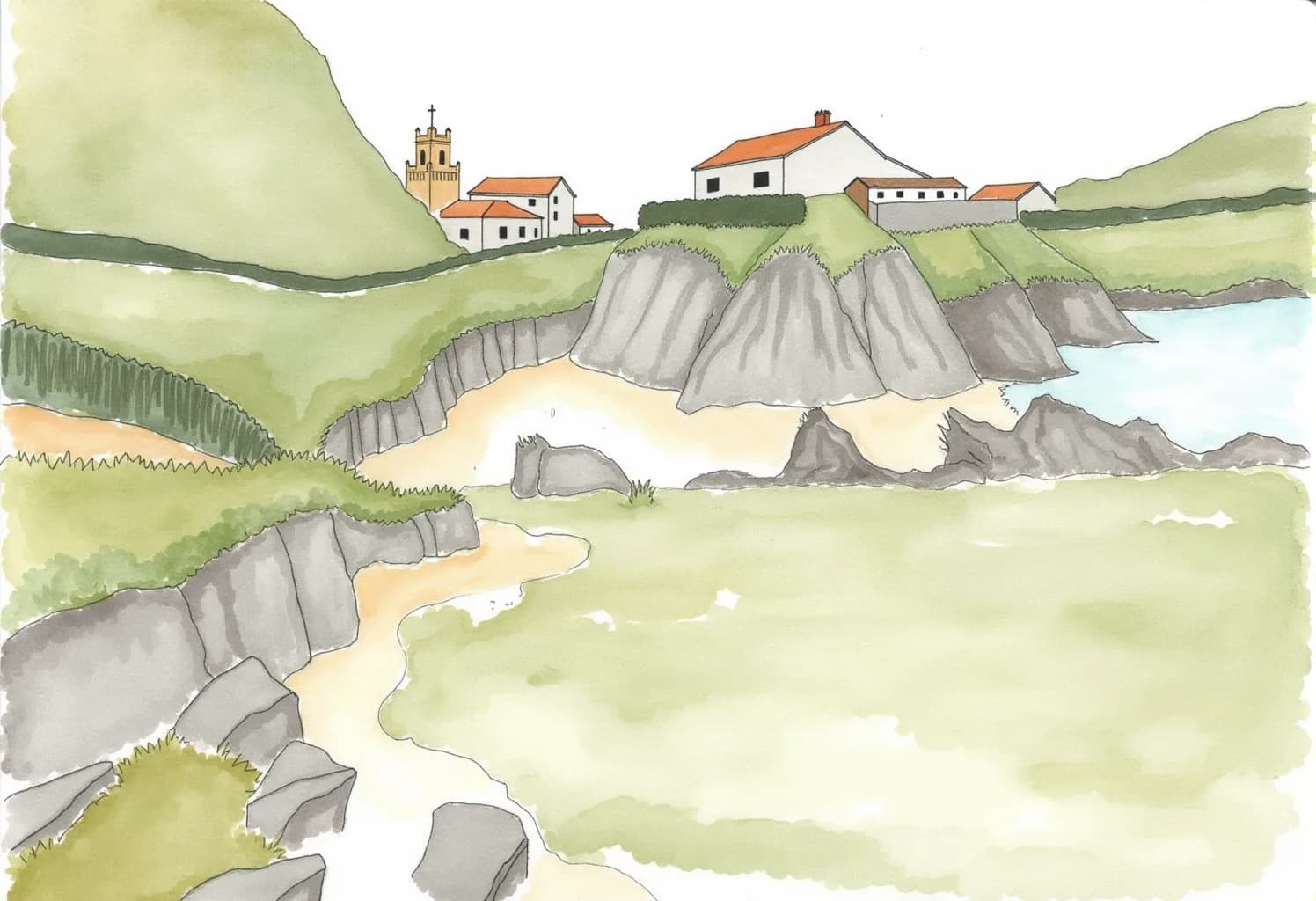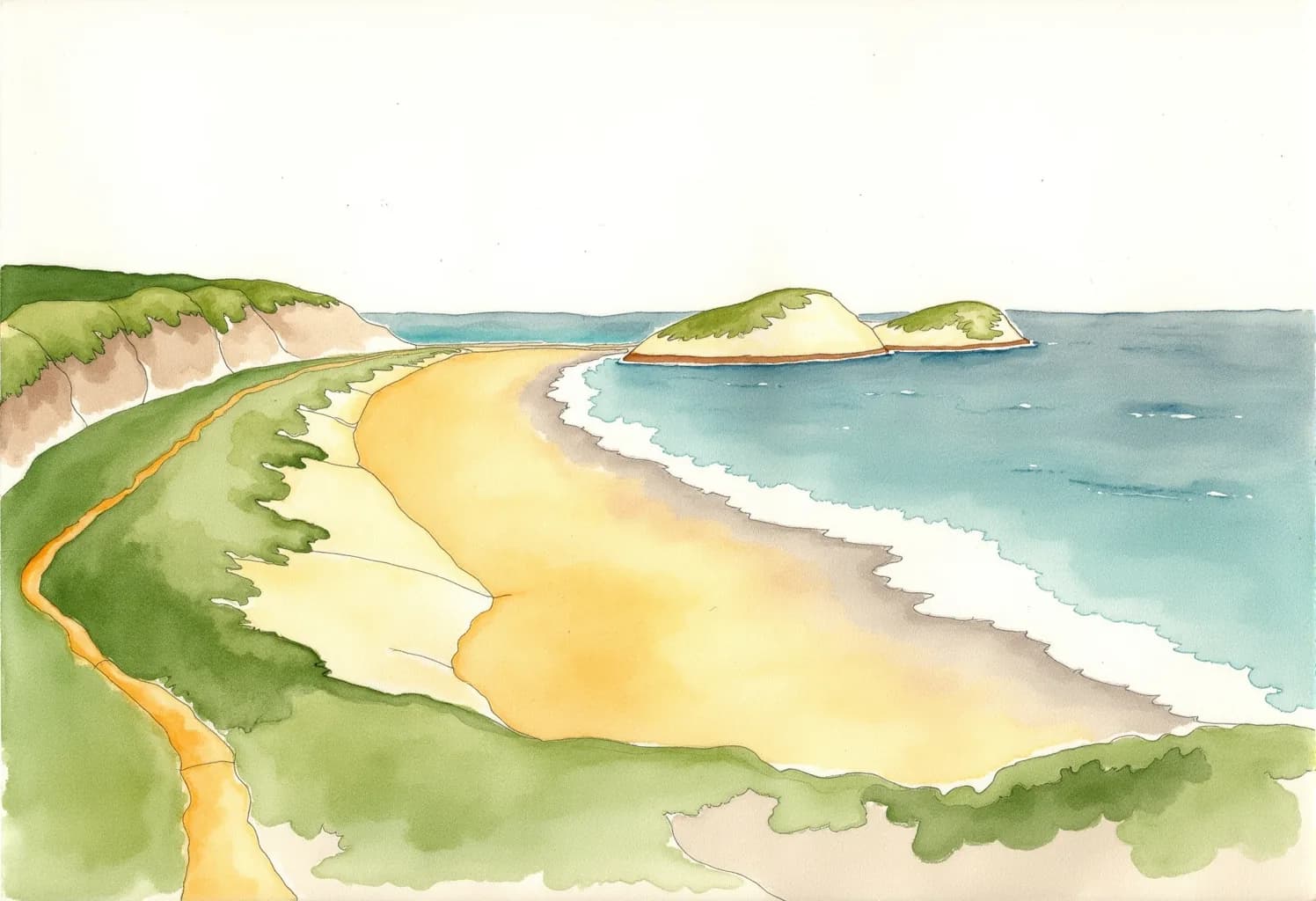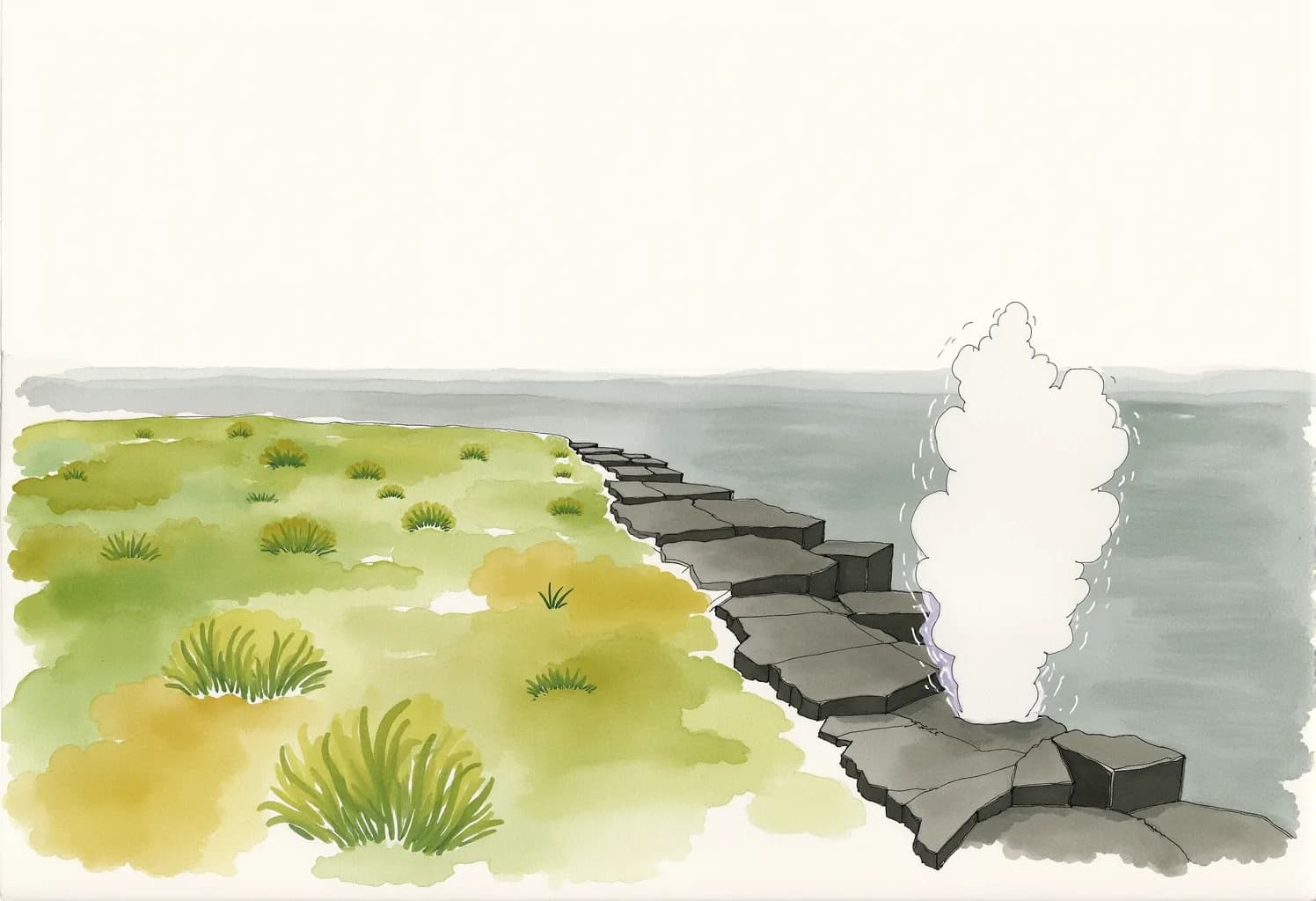
At Pría the sea comes in through cracks in the limestone and, in rough weather, shoots up like a geyser from the top of the cliff. In calm seas it is hardly noticeable; with an easterly and a spring tide it is a spectacle.
The phenomenon has a geological explanation: the Bay of Biscay has dug, over thousands of years, chimneys in the coastal limestone, and when the swell comes in the air and water are compressed and burst out through the holes. When the blow is strong, the jet can rise tens of metres.
It is best seen from the marked viewpoints: the jet is unpredictable and there is real danger near the edge of the cliff.
A little history
The Bufones de Pría are protected as a natural monument: the karst formations of this stretch of coast are among the most unusual in Europe. The name «bufón» comes from the «snorting» the holes make when the sea is rough.
- From the house
- 1 hr 10 min by car
- Duration
- 1 hr 30 min
- Best season
- Jan–Dec
Getting there
Without a car
Reach it by car or regional bus to the area; the viewpoint is a short walk away.
By car
Signposted parking in the Pría area.
Before you go
- You cannot drive to the bufones: the car park is a little over a kilometre away and the last stretch is on foot.
- The force of the blow depends on the sea: best to go with a storm or a spring tide.
- The jet is unpredictable and dangerous up close; watch it from the viewpoint.
Prices and opening hours link to the official source; they are never copied onto this site.