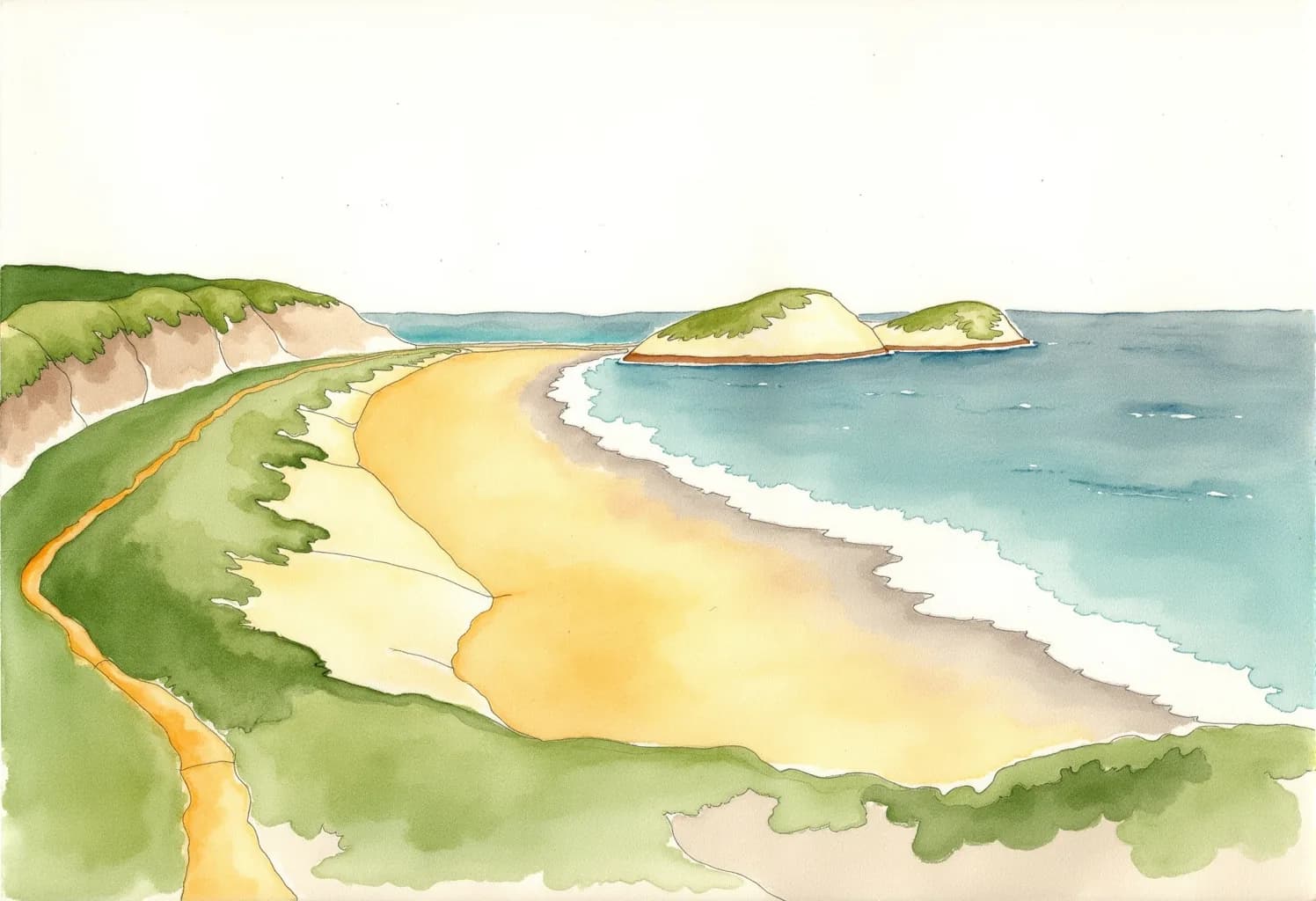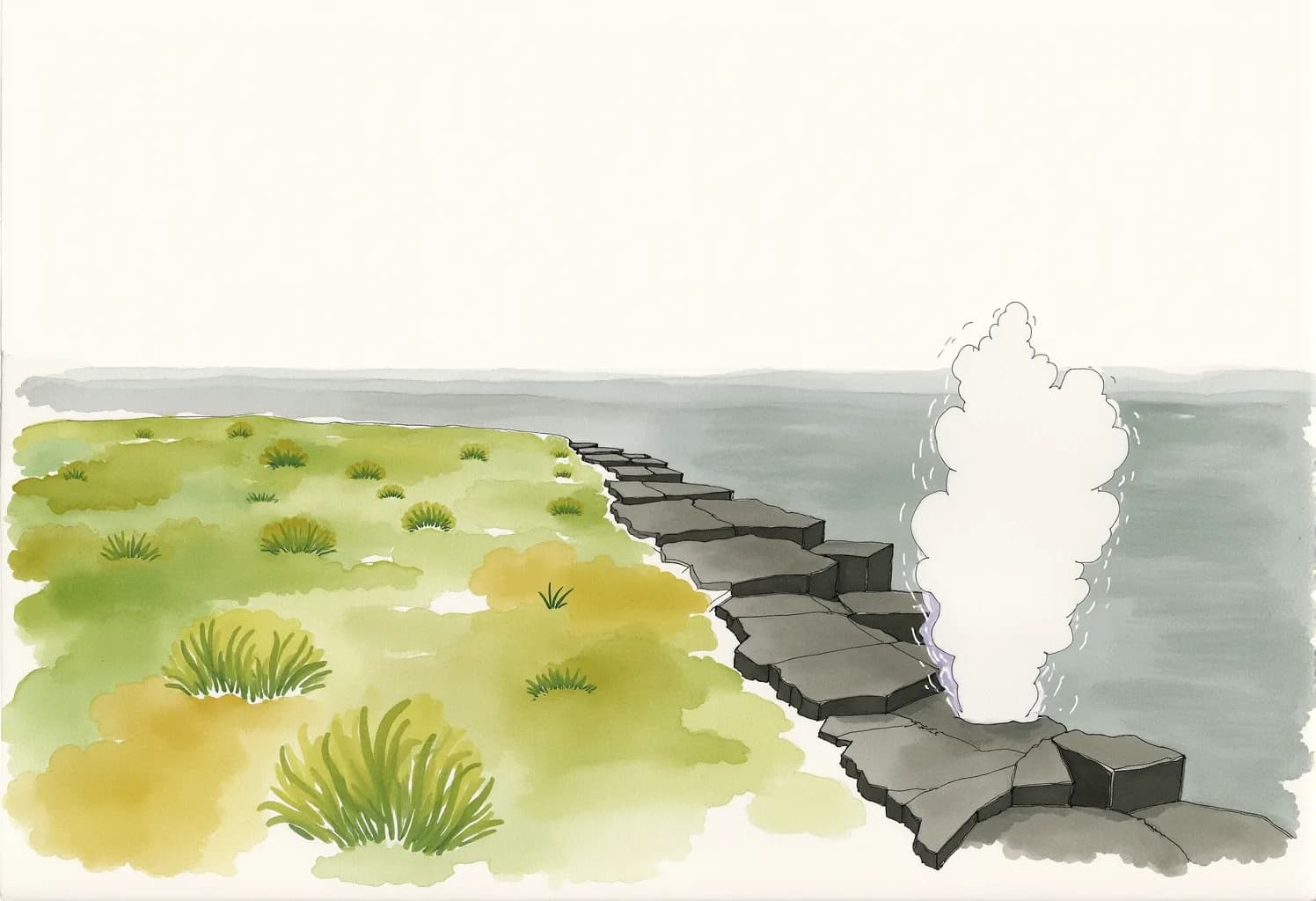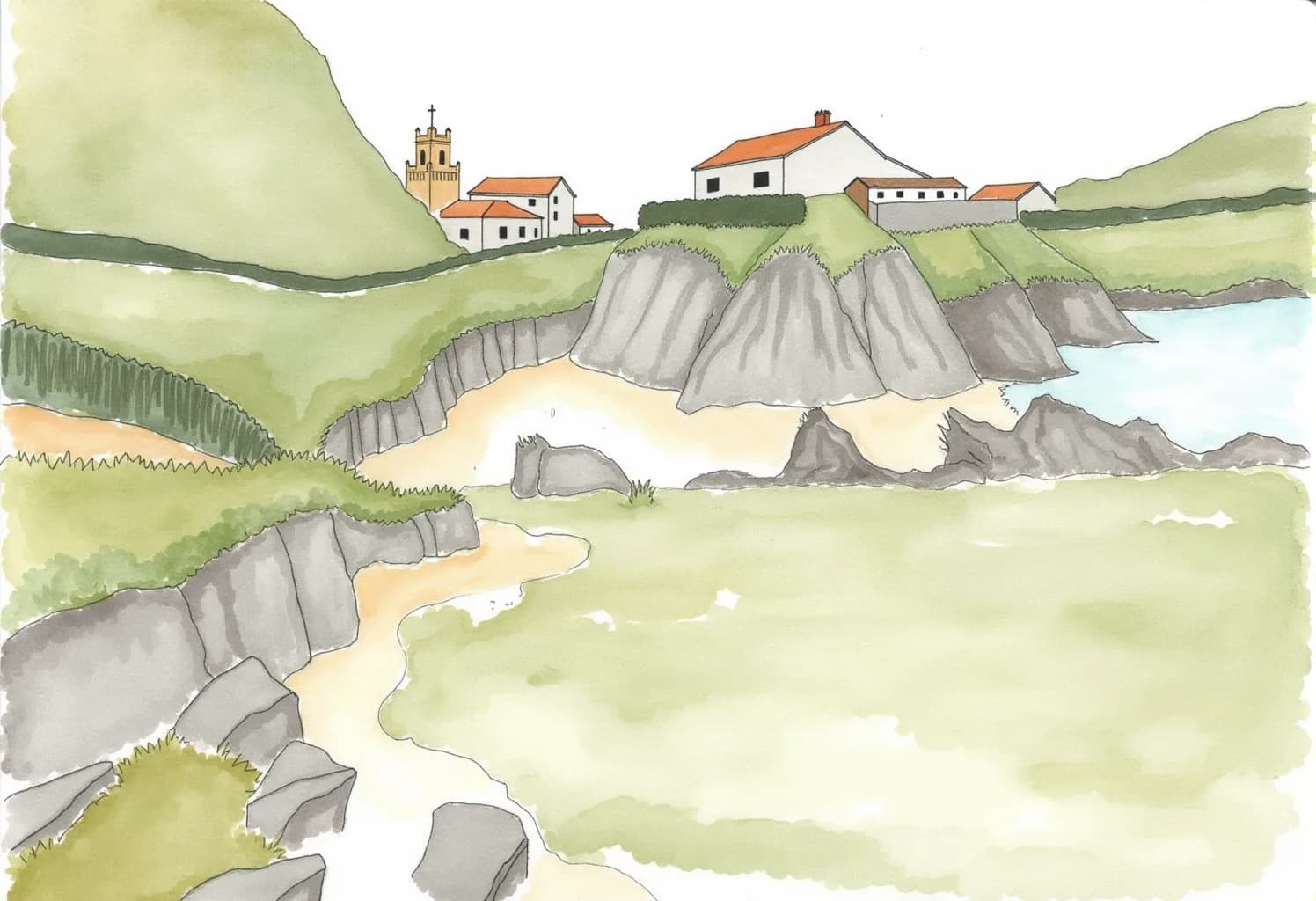
The sea slips in under the rock and surfaces in a hollow in the field, a hundred metres inland: a crescent of sand with real waves and cows grazing around the rim. It is a natural monument, and it is the size of a courtyard.
What makes it work is the tide: at high tide the water comes in through the underground galleries and the beach exists; at low tide it becomes a dry hole with the sea murmuring underneath.
A little history
Gulpiyuri is protected as a natural monument: it is one of the few inland beaches of these characteristics in Europe, formed by the sea slowly dissolving the limestone over thousands of years.
- From the house
- 1 hr 15 min by car
- Duration
- 3 hr
- Best season
- May–Sep
Getting there
Without a car
Regional bus to Naves or Posada de Llanes and about twenty minutes on a track through the fields.
By car
An hour and a quarter from the house. Park at Naves and finish on foot: no road reaches it.
Before you go
- There is only water at high tide. At low tide it is a sandy hollow, and the photograph you have seen does not exist.
- It is tiny and very well known: in August at midday nobody fits. First thing in the morning is another matter.
- No facilities, no shade, no bins. What comes in goes out.
- The walk from the car park is flat and short: it works well with children.
Prices and opening hours link to the official source; they are never copied onto this site.